Use SRA accession SRX9665373 and run SRR13233412 as the raw paired-end whole-genome sequencing source.
NGS bioinformatics
Canine SNP Project
Bioinformatics pipeline for identifying SNPs associated with canine degenerative myelopathy from low-coverage whole-genome sequencing data.

Background
Researchers need to identify genetic variants associated with canine degenerative myelopathy from whole-genome sequencing data.
Canine SNP Project is a bioinformatics pipeline for investigating single-nucleotide polymorphisms associated with canine degenerative myelopathy. The source data is public low-coverage whole-genome sequencing from the Sequence Read Archive entry SRX9665373, including paired-end Illumina NovaSeq 6000 reads from a Canis lupus familiaris sample.
Project Workflow
Move raw reads through a preparation step so alignment and SNP search are reproducible.
Map the canine reads to a reference genome, then search for SNPs that can be investigated further.
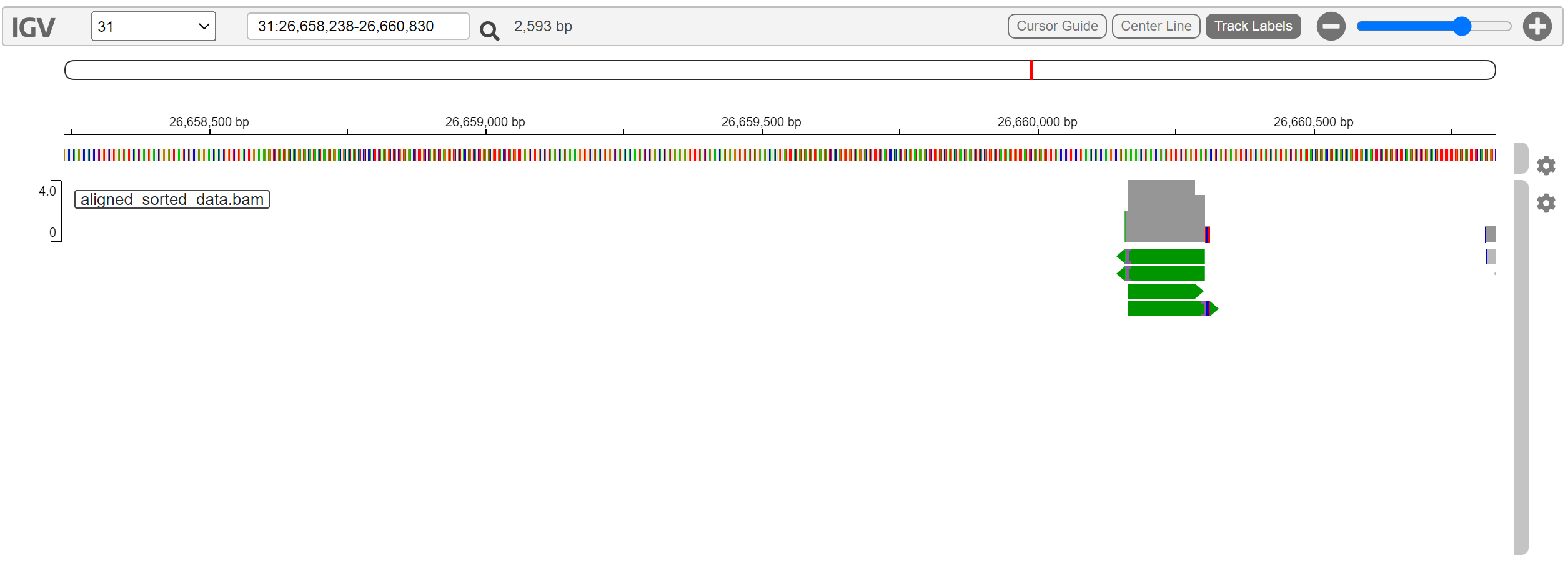
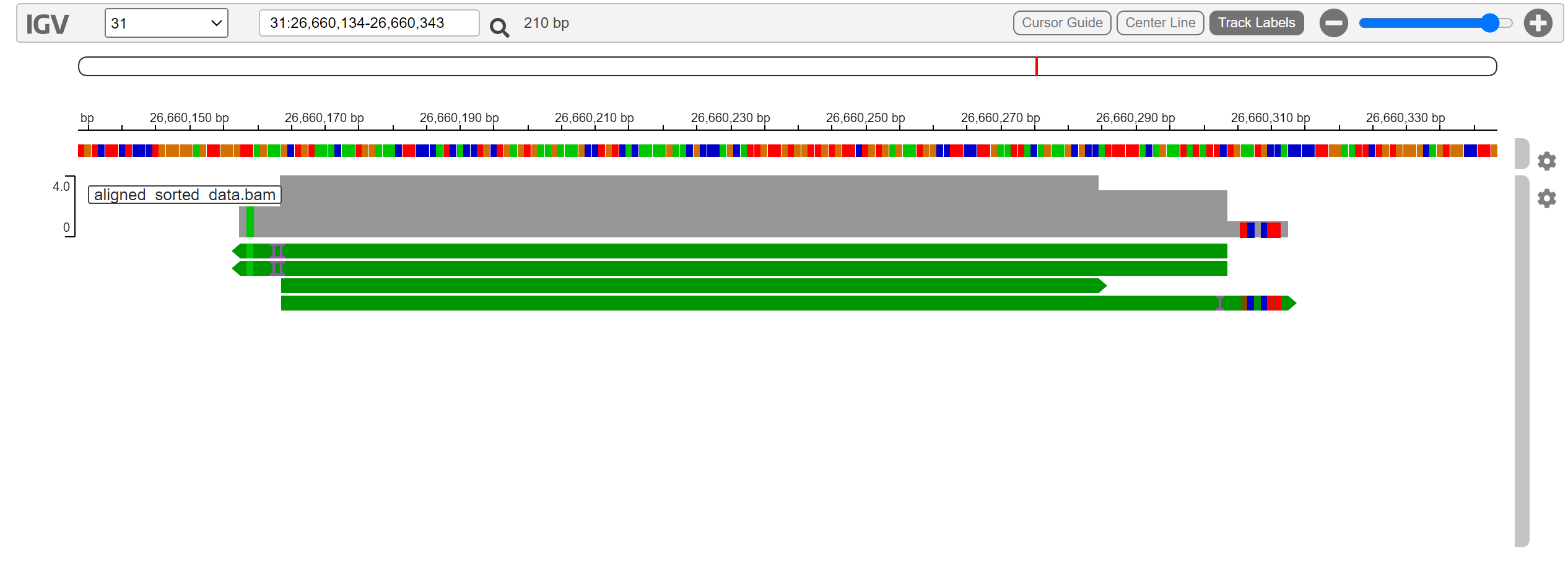
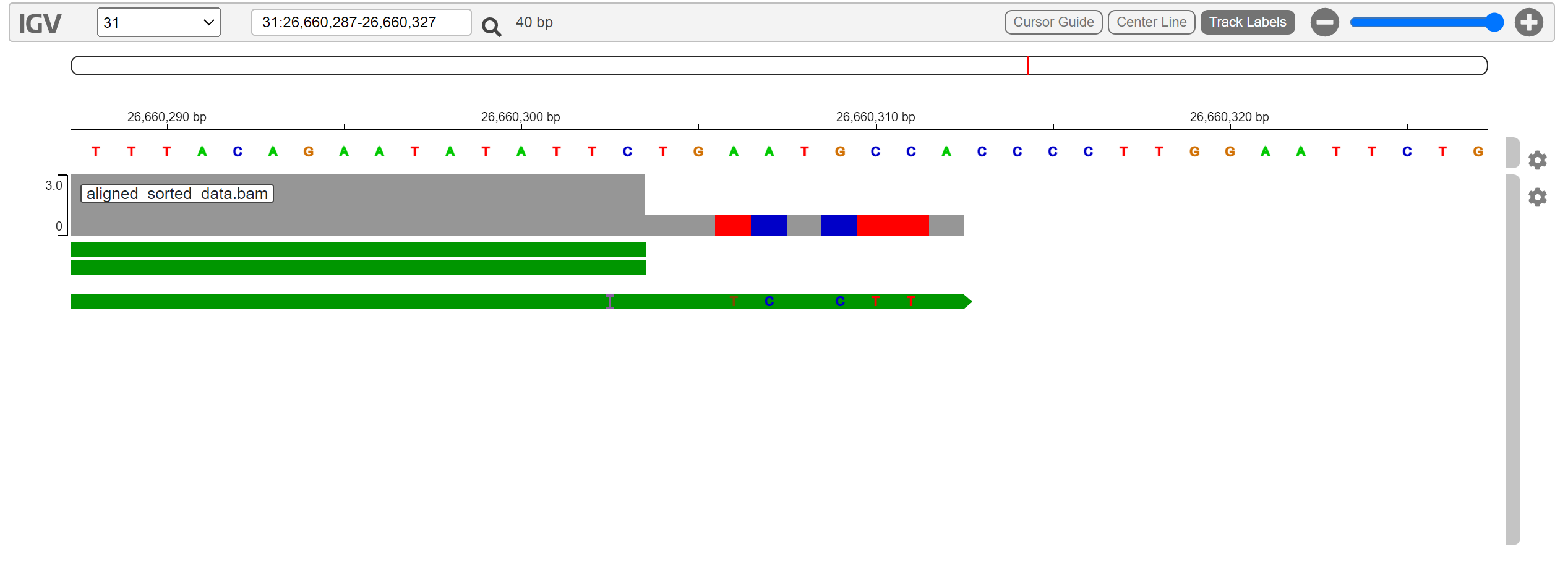
Load the sorted BAM into Integrative Genomics Viewer and check read support and base-level mismatches before treating a position as a real SNP.
Translate candidate SNPs into gene-level context for canine degenerative myelopathy interpretation.
IGV Interpretation
IGV screenshots turn the alignment output into variant-level evidence.
The figures from Integrative Genomics Viewer (IGV) show progressively tighter views of chromosome 31. Read coverage, mismatched base colors, and read orientation help distinguish candidate SNP evidence from ordinary alignment context.