Reanalyze whole-blood RNA-seq data from a published WBH study and compare pathway-level results across differential-expression methods.
RNA-seq bioinformatics
Hyperthermia Gene Set Enrichment Analysis
End-to-end RNA-seq and GSEA workflow for whole-blood samples after exposure to temperature stress.
Background
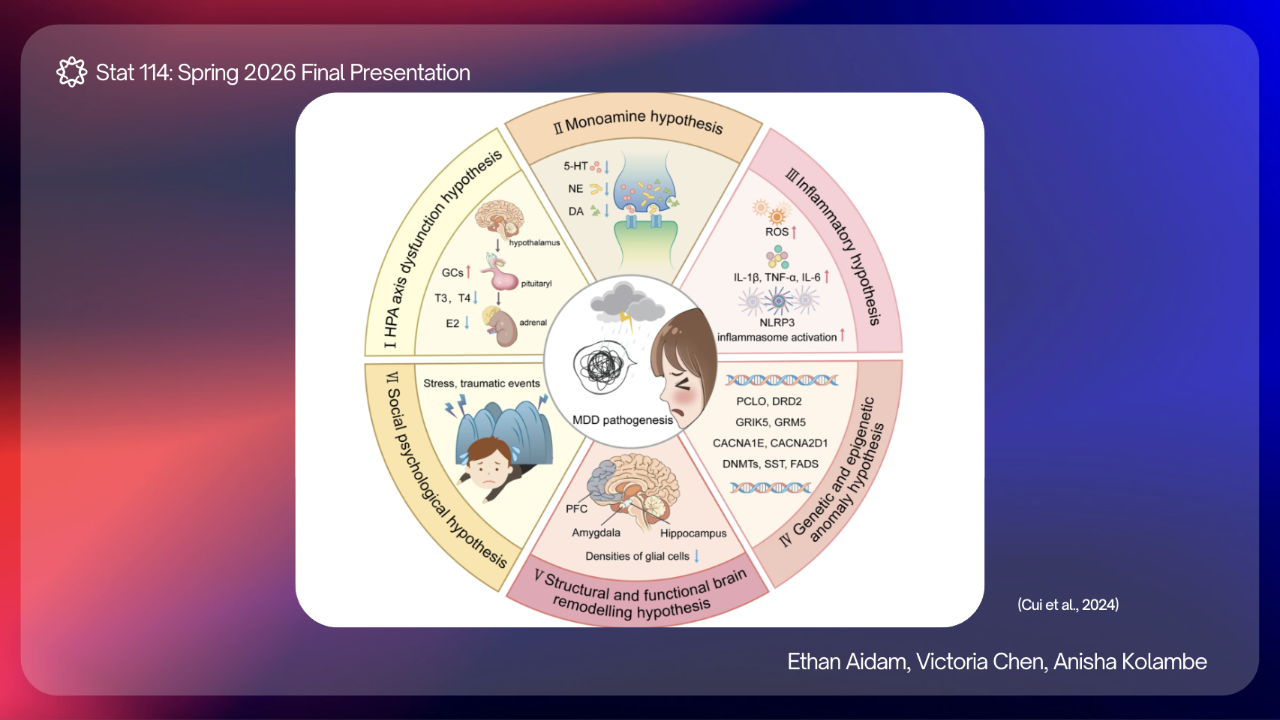
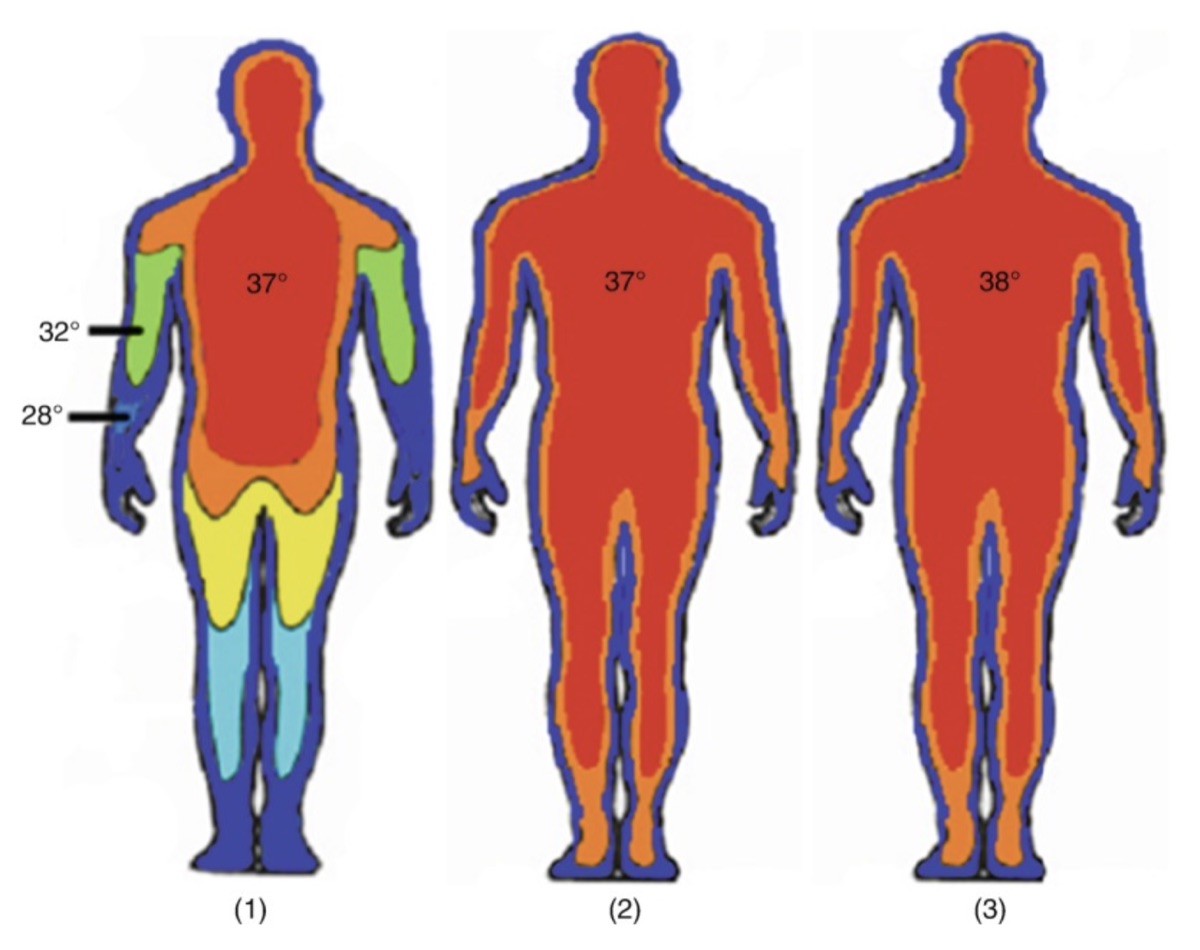
Can whole-body hyperthermia alter biological pathways implicated in depression?
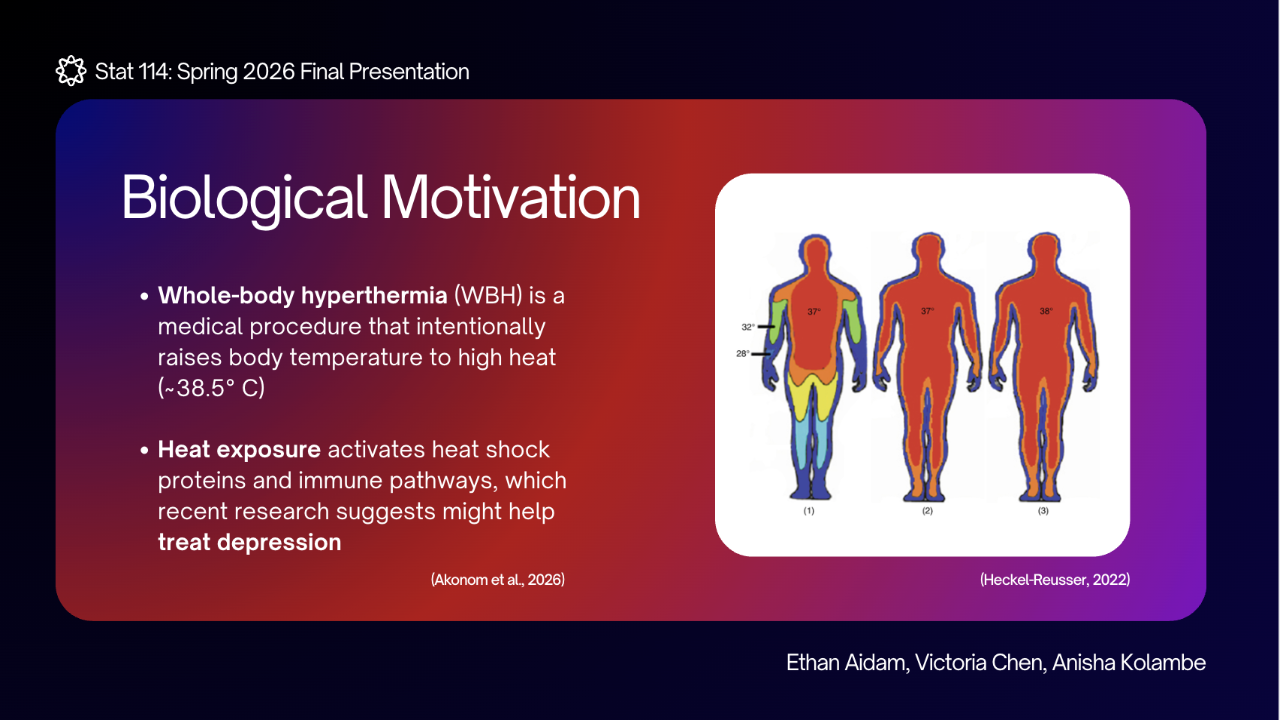
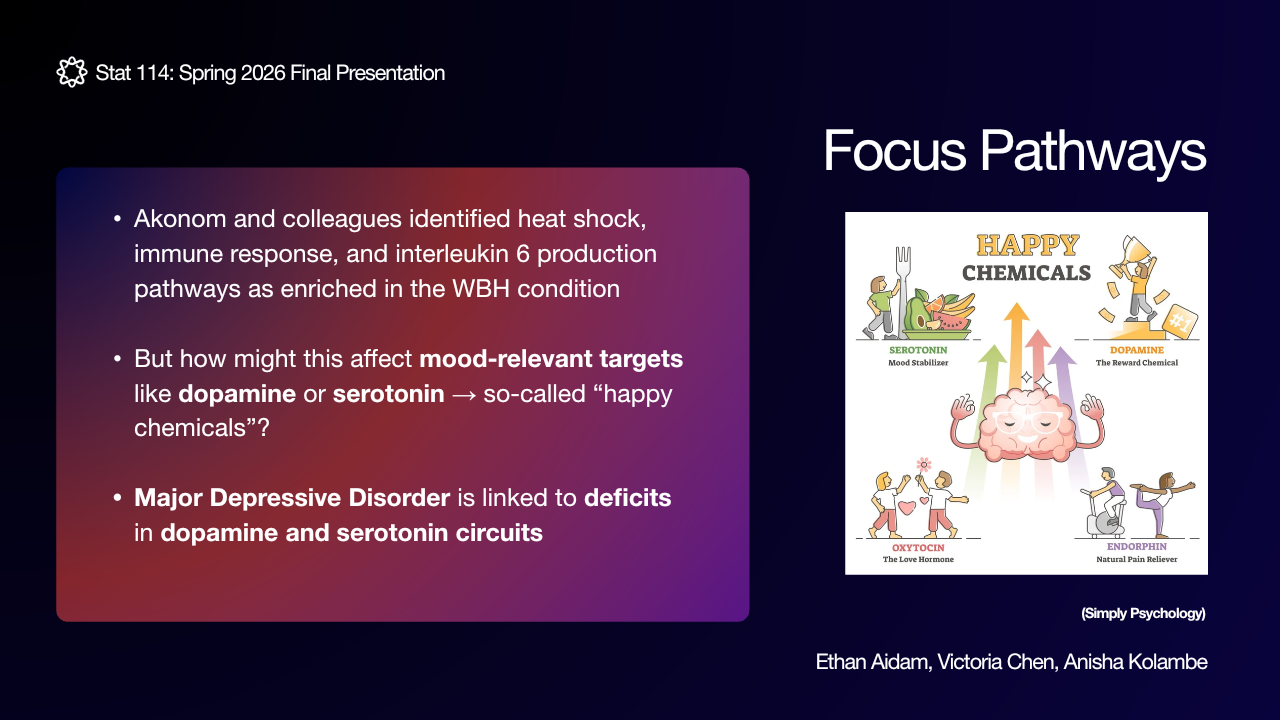
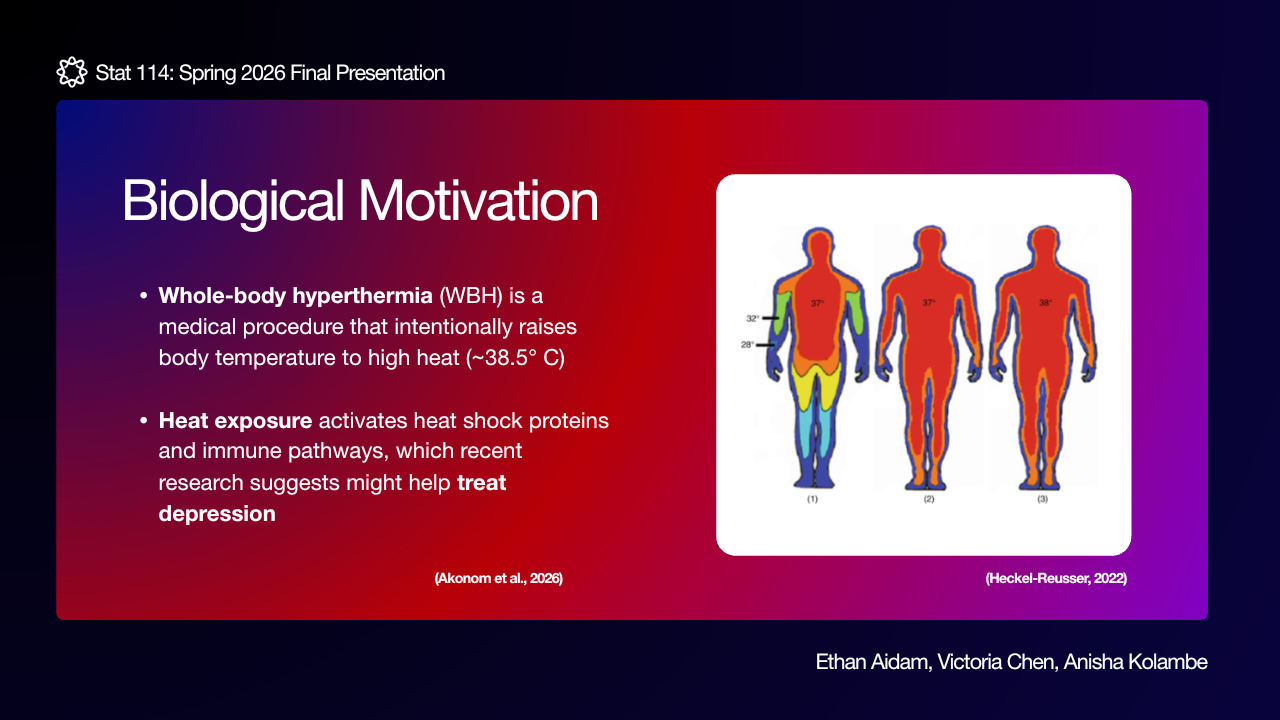
Whole-body hyperthermia (WBH) is a medical procedure that intentionally raises body temperature and has been investigated as a potential treatment for depression. Previous research found that heat shock, immune-response, and interleukin-6 pathways were enriched following WBH, but the effects of treatment on other depression-relevant pathways remained less clear.
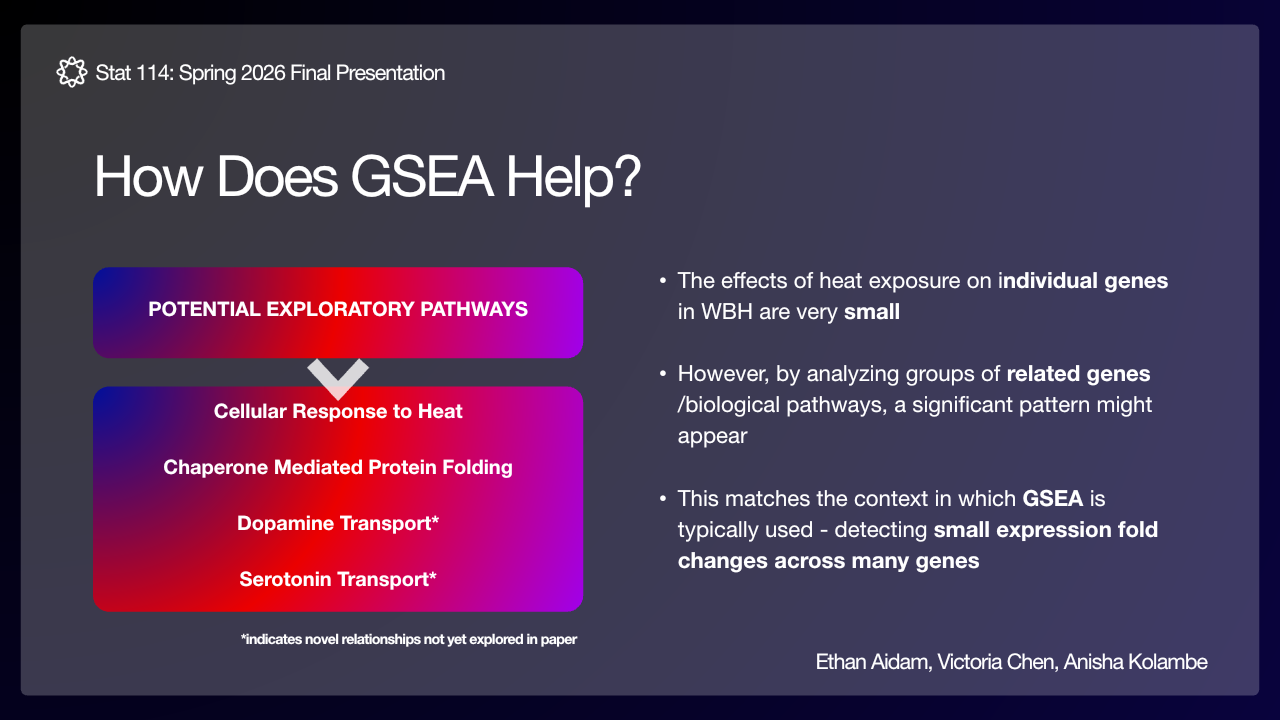
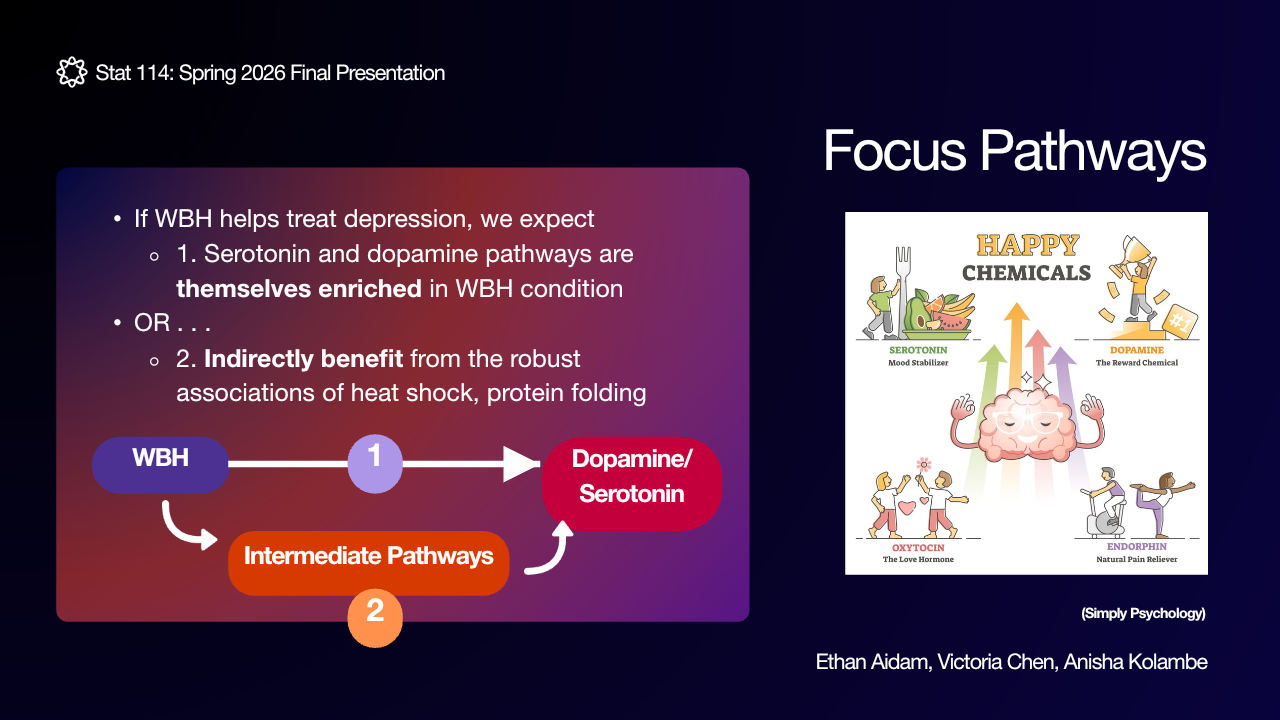
We analyzed whole-blood RNA-seq data to investigate whether WBH alters expression across serotonin, dopamine, intermediate signaling, and heat-shock pathways, moving beyond individual genes to identify coordinated changes in biologically related gene sets.
Project Goals
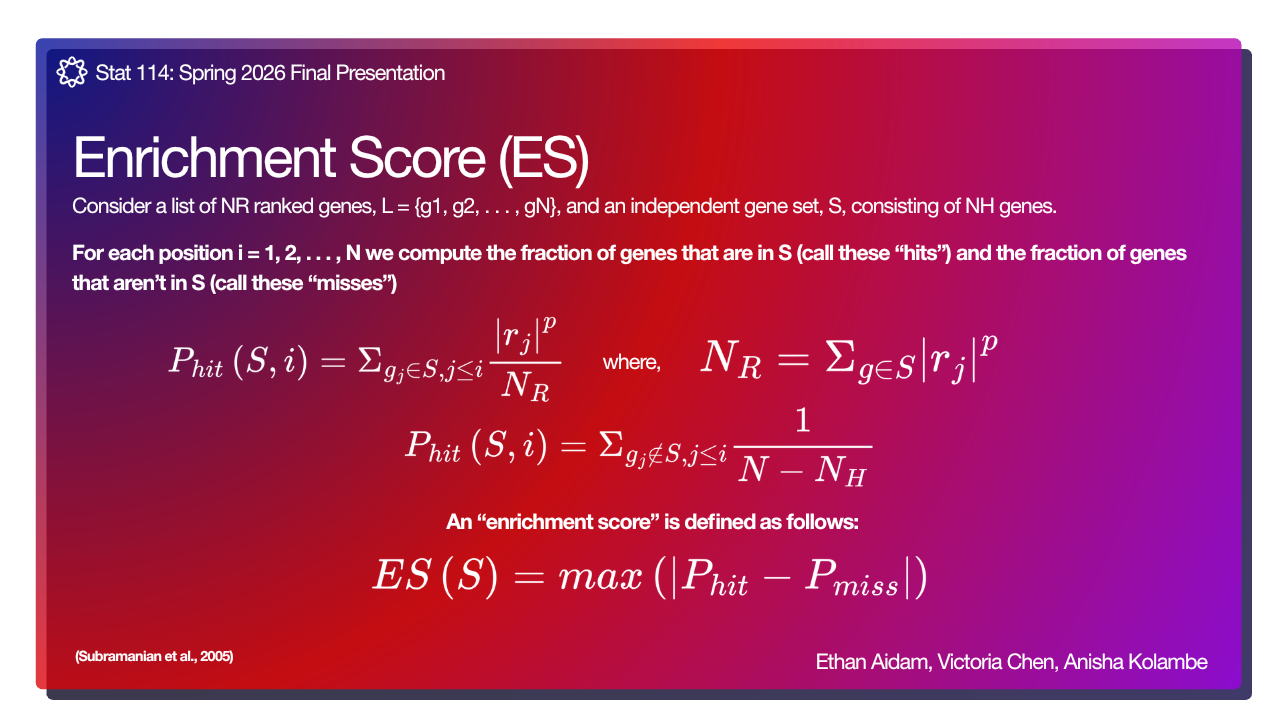
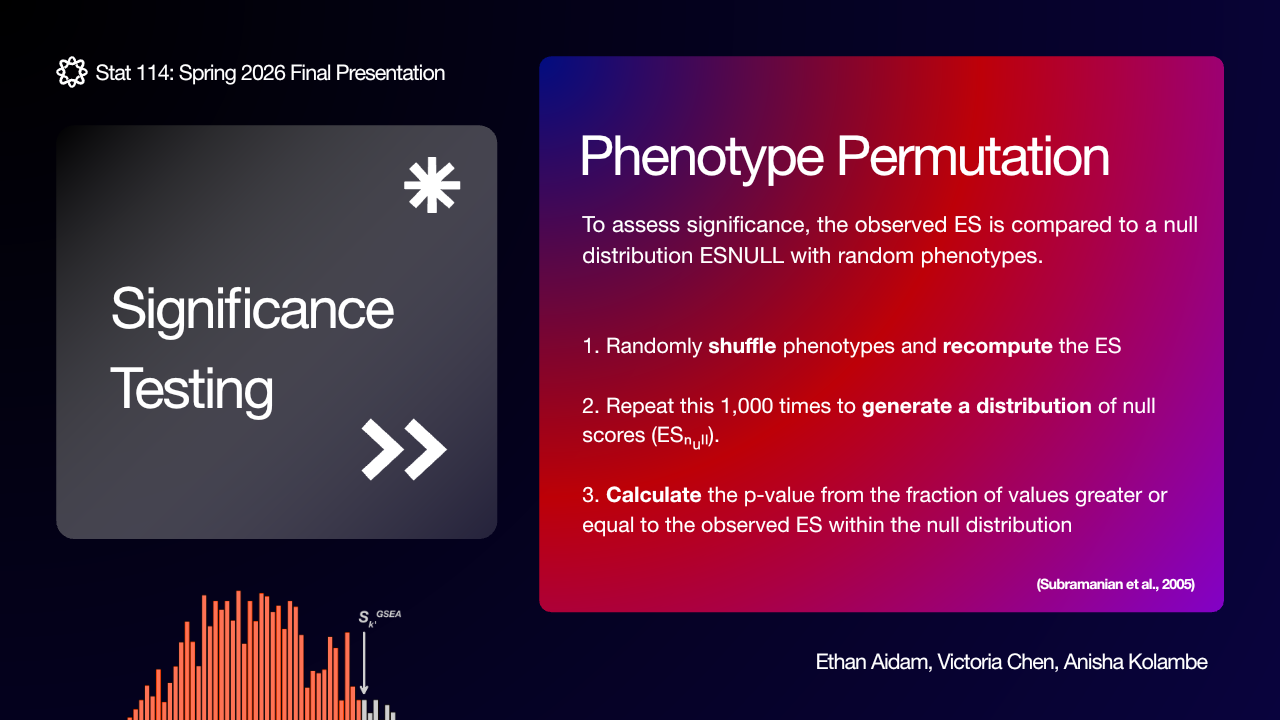
Build a custom Gene Set Enrichment Analysis pipeline to calculate enrichment scores, normalized enrichment scores, and permutation-based significance.
Test whether WBH produces coordinated expression changes in serotonin, dopamine, intermediate signaling, and heat-shock pathways.
Apply Benjamini-Hochberg and Storey multiple-testing corrections to distinguish exploratory pathway signals from statistically supported findings.
Pipeline
From sequencing reads to pathway scores.
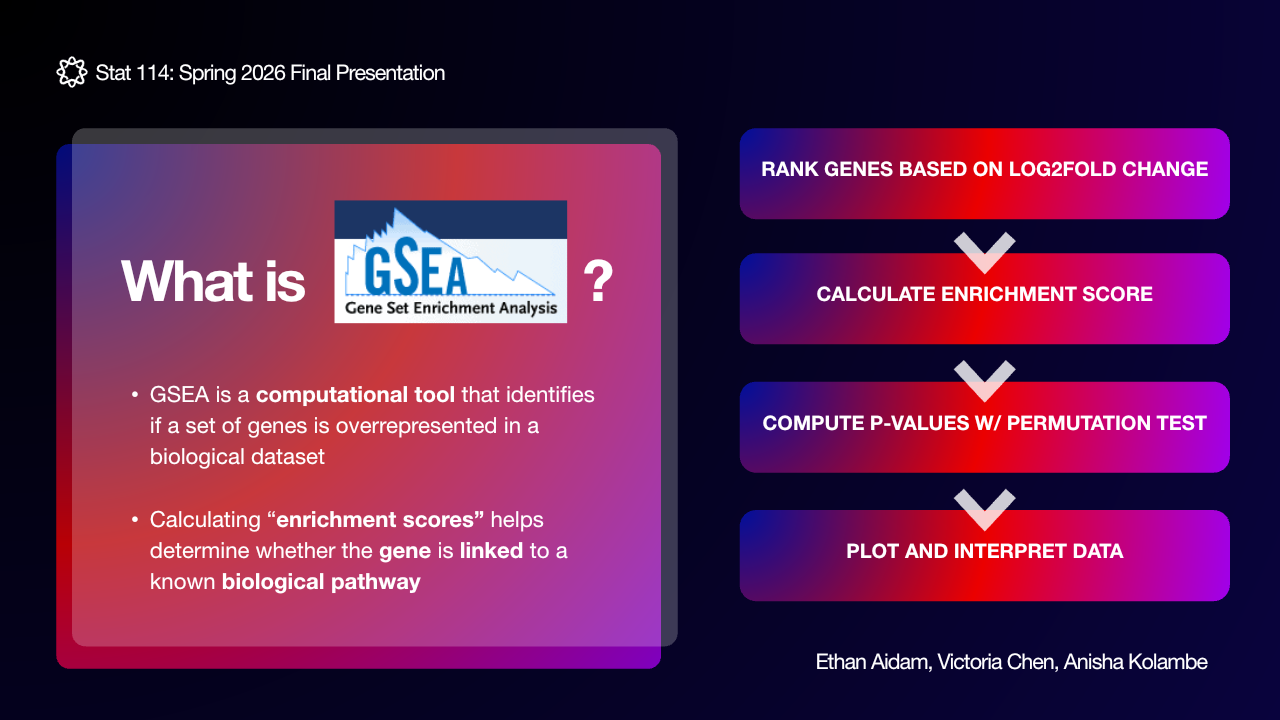
The analysis moves from count data to ranked treatment contrasts, then asks whether predefined gene sets appear unusually early or late in that ranked list.
Download paired sequencing files by SRR accession.
Run FastQC to inspect read quality before alignment.
Align reads and produce gene-level count outputs.
Model WBH versus sham and rank genes by log2 fold change.
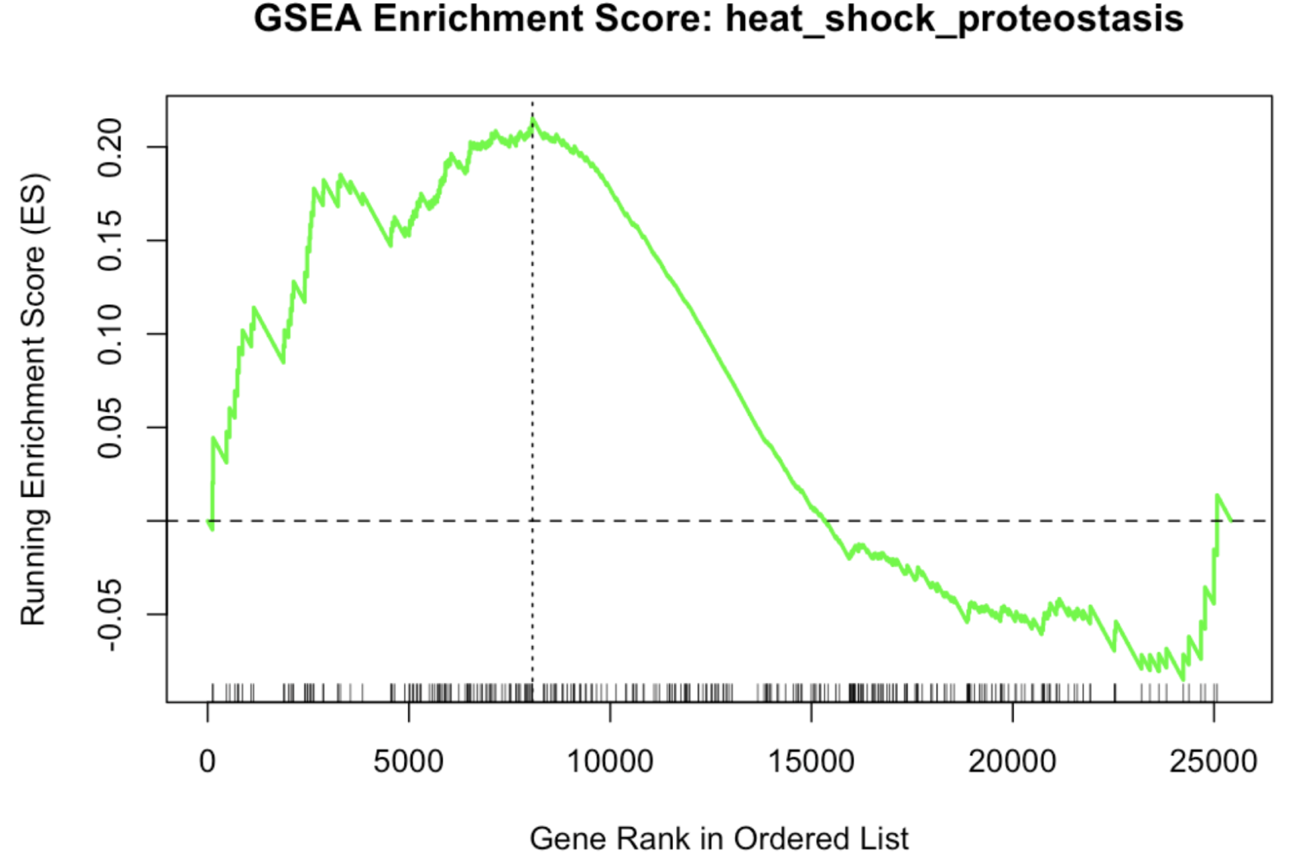
Compute running ES, NES, empirical p-values, and adjusted p-values in R.
Compare custom results with preranked desktop analyses.
Metric Definition
NES measures the strength and direction of pathway enrichment.
The Normalized Enrichment Score (NES) compares a gene set’s observed enrichment score with scores expected under phenotype permutations. Normalization allows enrichment to be compared across gene sets while preserving direction: positive NES values indicate enrichment toward genes elevated in WBH, while negative values indicate enrichment toward the opposite end of the ranked expression profile.
Associated Presentation
STAT 114 Hyperthermia GSEA Final Project
Final presentation for the RNA-seq and gene set enrichment analysis project, including workflow and biological interpretation.