Use continuously measured exercise and physiological signals to estimate blood lactate without relying on repeated blood sampling.
Physiological machine learning
Blood Lactate Estimation
Predicting blood lactate from non-invasive physiological signals using linear, ensemble, and Bayesian hierarchical models.
Background
Can blood lactate be estimated from wearable physiological signals without drawing blood?
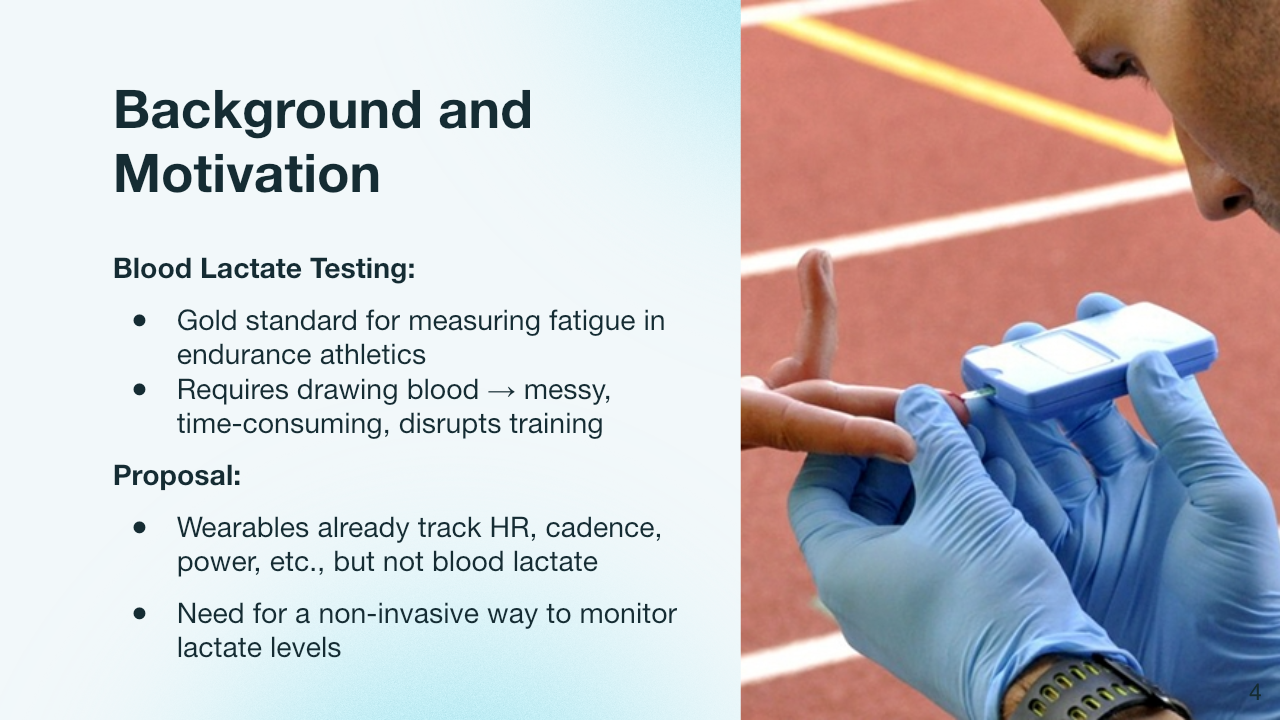
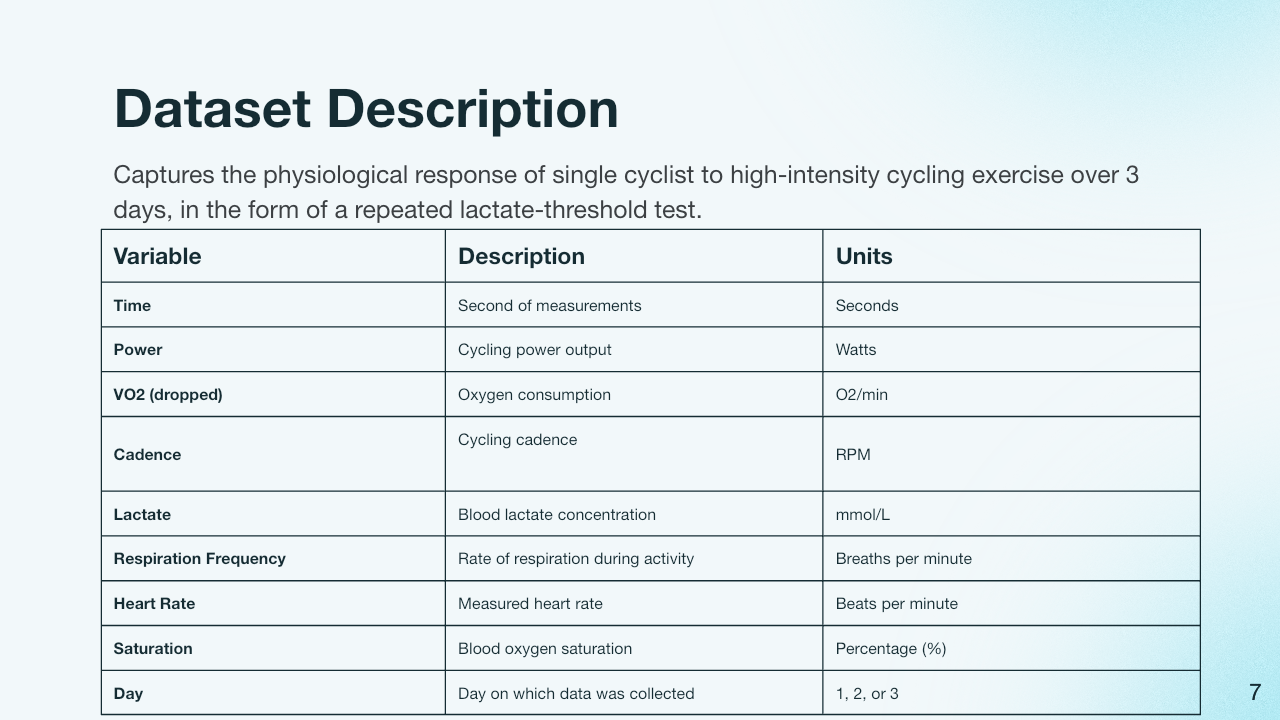
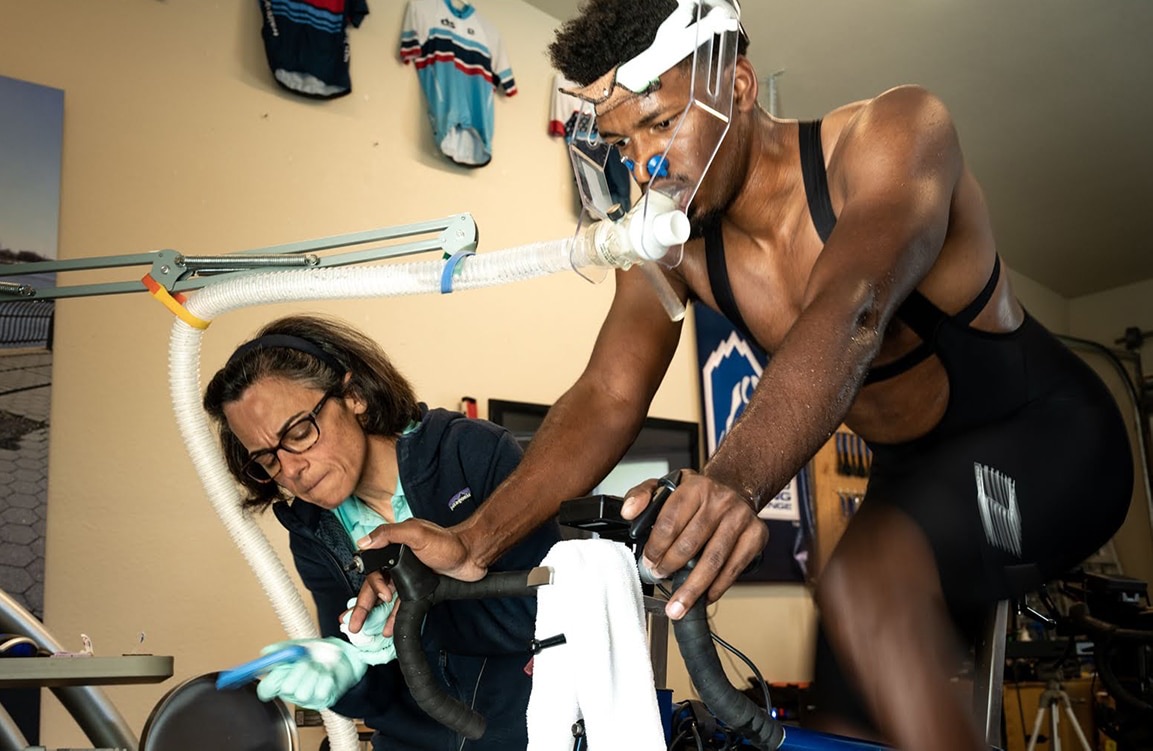
Blood lactate testing is a gold-standard method for assessing fatigue and physiological response during endurance exercise, but collecting lactate requires repeated blood draws that are time-consuming and disruptive to training. Meanwhile, athletes already continuously collect signals such as heart rate, cadence, power, respiratory frequency, and oxygen saturation using non-invasive sensors.
We investigated whether these signals could be used to predict blood lactate and, specifically, whether nonlinear models outperform traditional linear approaches when modeling the complex physiological response to exercise.
Project Goals
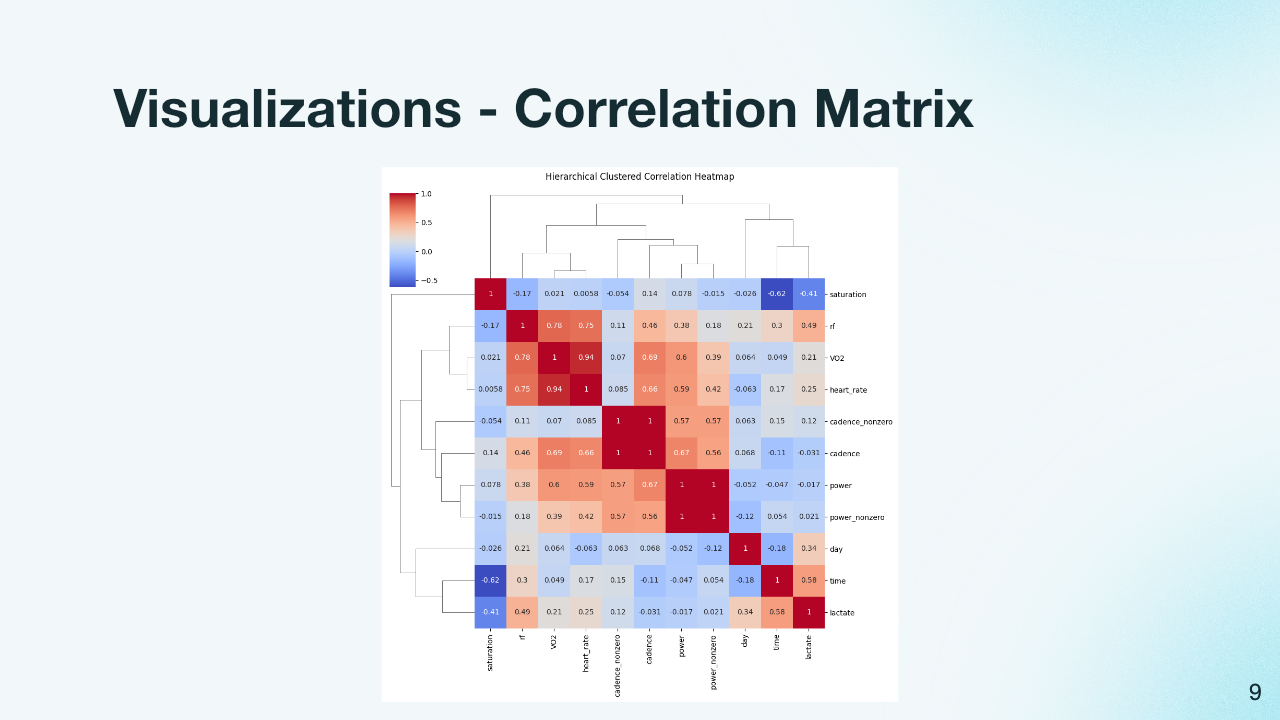
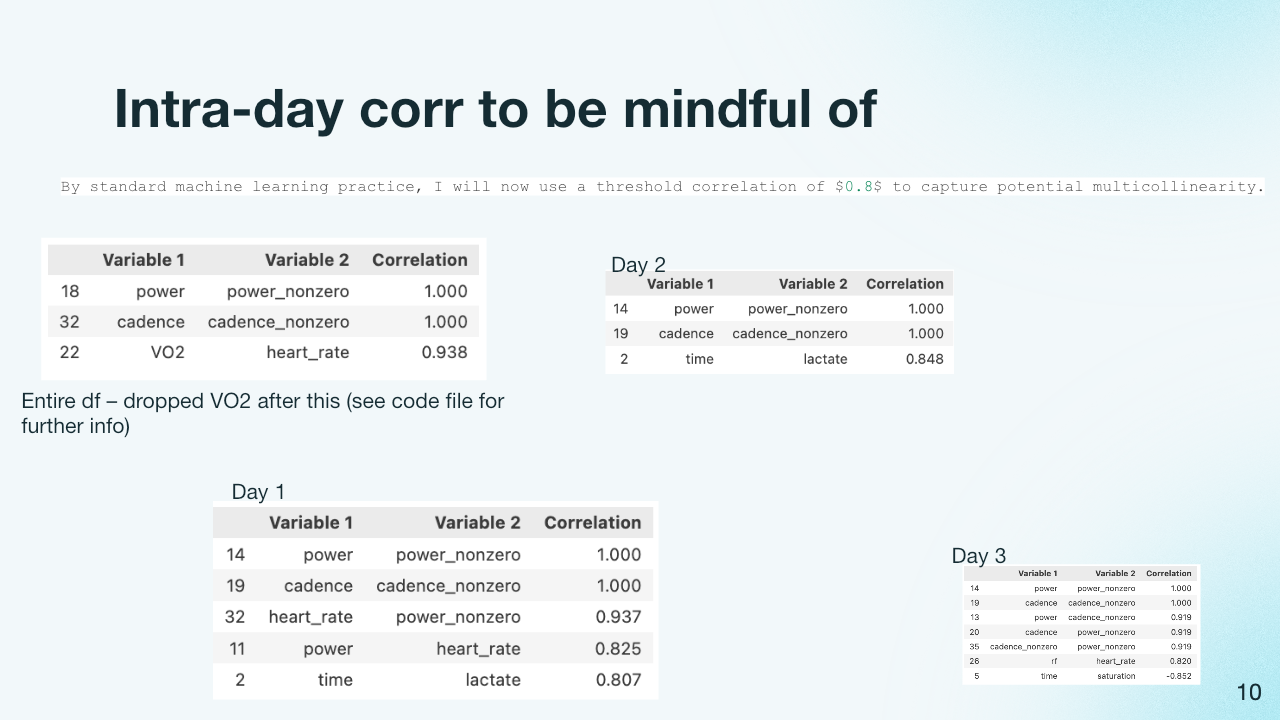
Benchmark linear regression approaches against decision trees, random forests, gradient boosting, and mixture-of-experts models.
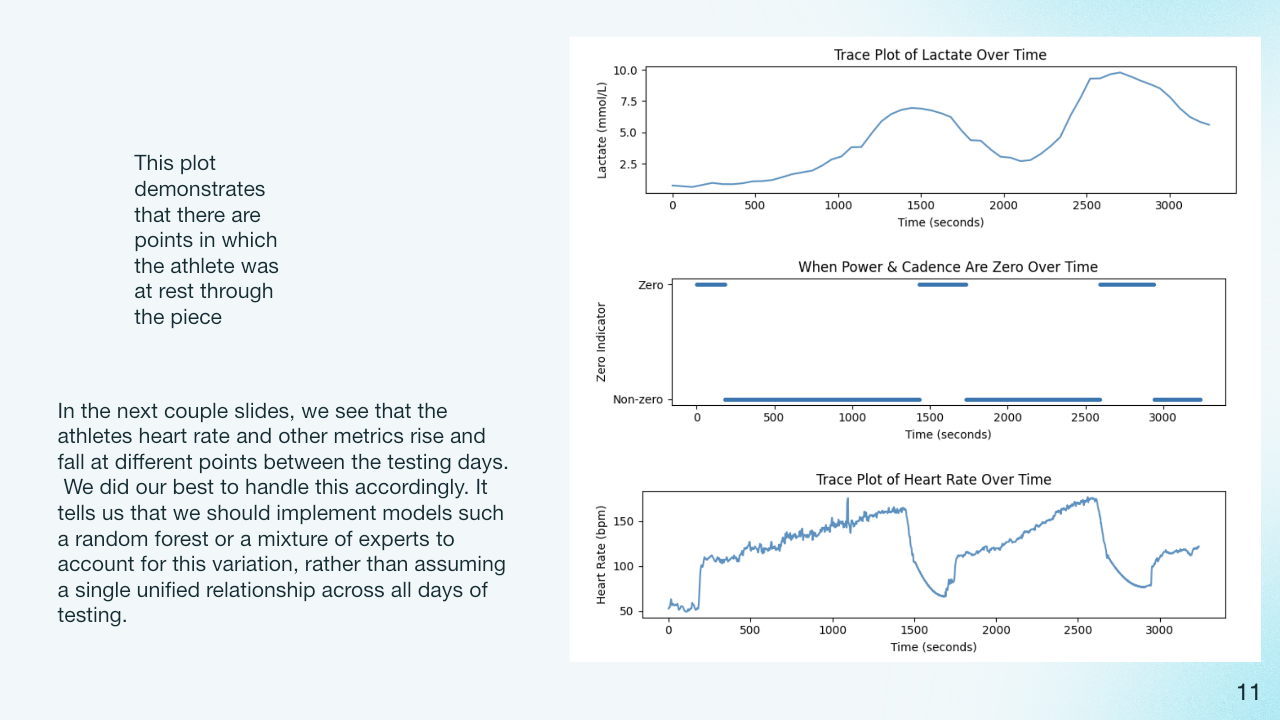
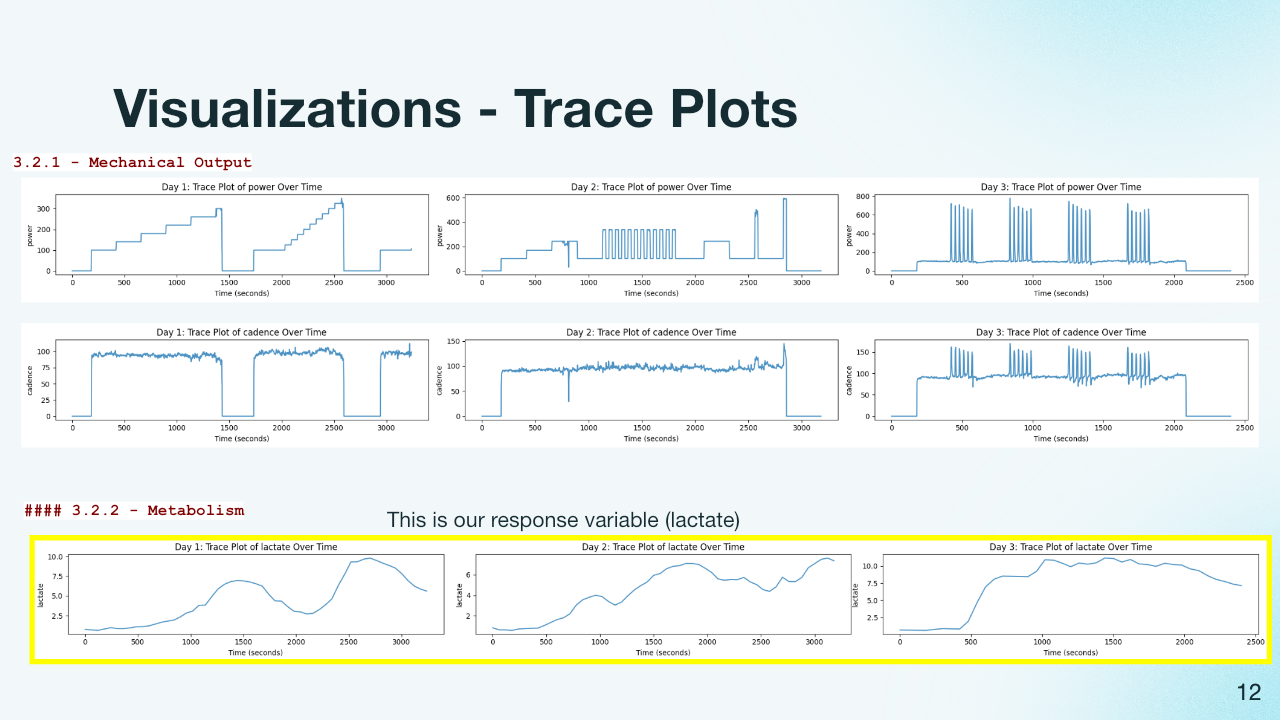
Model day-to-day differences in exercise protocol and physiology rather than assuming one relationship holds identically across every session.
Evaluate which non-invasive measurements contribute most strongly to lactate prediction.
Associated Presentation
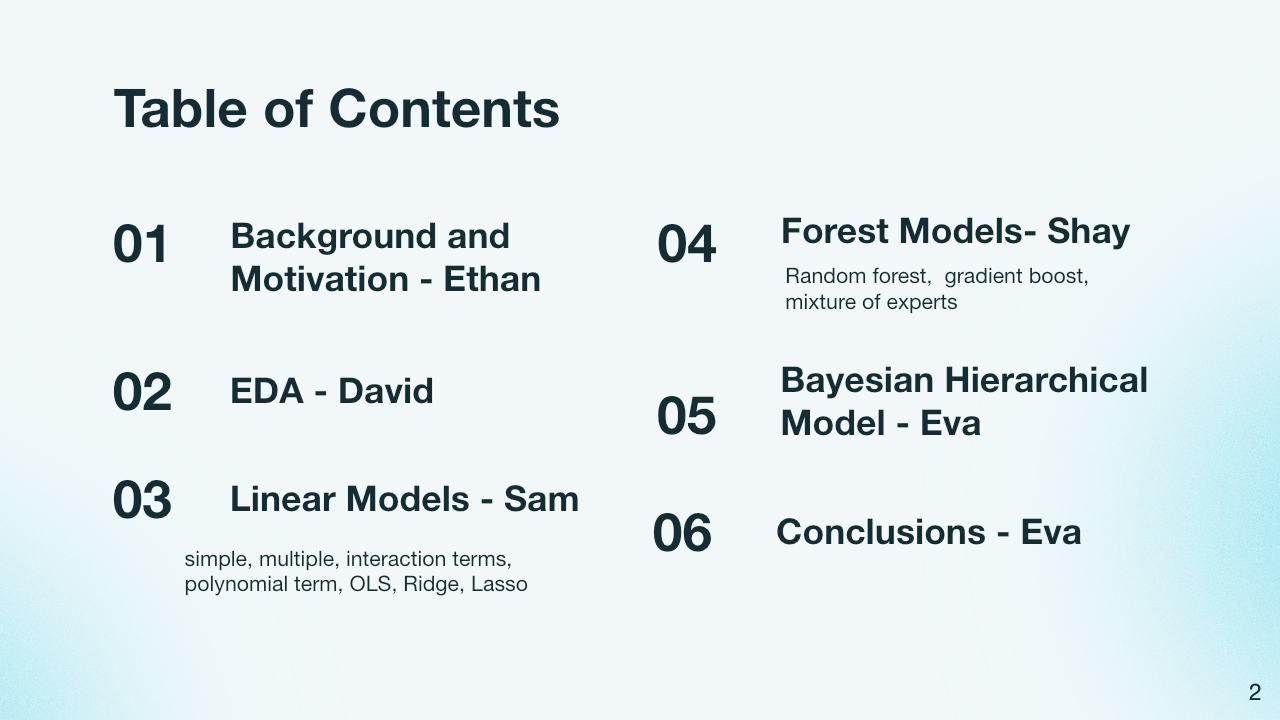
CS 1090A Blood Lactate Final Project
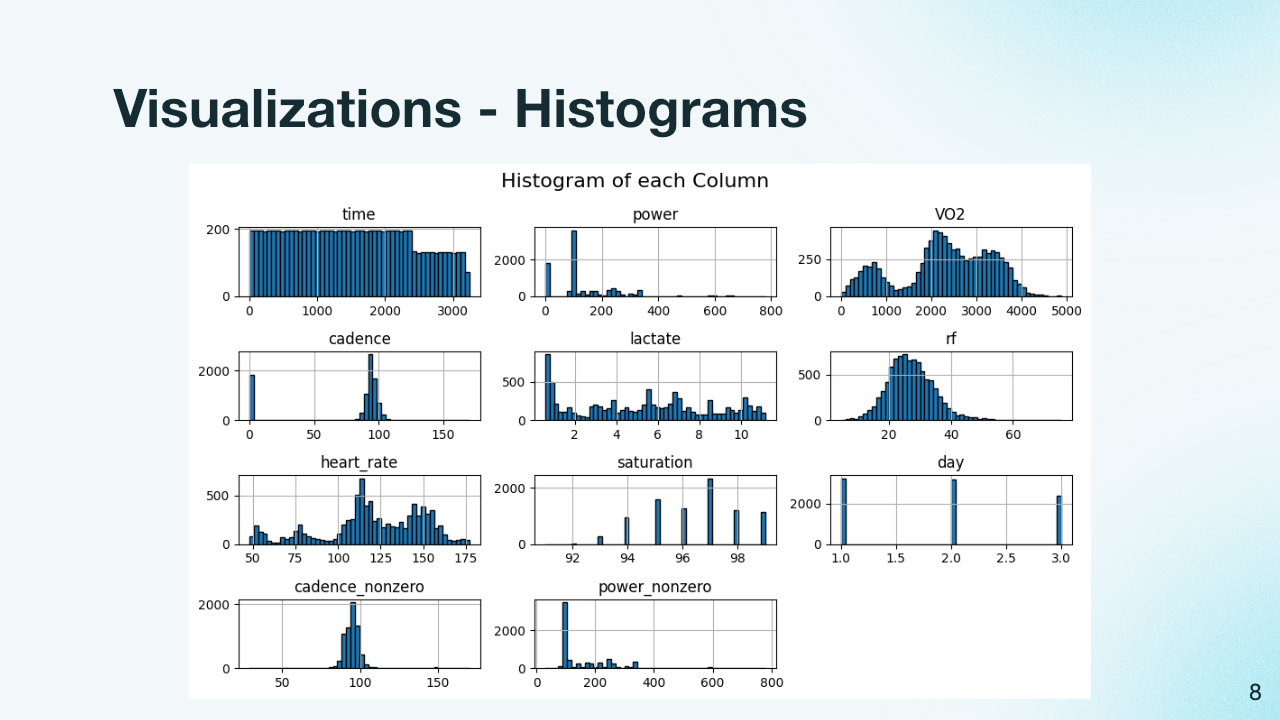
Final project deck for the blood lactate estimation analysis, including data exploration, modeling, and results.